Dallas has world-class restaurants, a skyline that photographs well, and enough brunch spots to sustain a small nation. It also has ghosts – or at least, enough credible reports of unexplained footsteps, vanishing women, and self-operating elevators to make even the skeptics pause at a hotel hallway. The most haunted places in Dallas span more than a century of history, from a 1912 luxury hotel where the elevators have a body count to a Deep Ellum dance hall where someone reportedly never left the party. Here are 11 locations where the past refuses to check out.
1. The Adolphus Hotel – Downtown
Commerce Street, Downtown Dallas
Built in 1912 by beer baron Adolphus Busch (yes, that Busch), the Adolphus has been one of Dallas’s most prestigious addresses for over a century. It has also been one of its most reliably haunted.
The trouble started early. Just weeks after the grand opening, a waiter stepped into an empty elevator shaft and fell to his death. More elevator-related fatalities followed over the decades – an operator, a porter, a cook – giving the hotel’s vertical transportation an unsettling track record that no amount of renovation has fully erased.
The hotel’s most famous ghost is the so-called “Jilted Bride,” a woman who reportedly took her own life on the 19th floor in the 1930s after being left at the altar. Guests on upper floors have reported hearing a music box playing 1930s-era tunes, and staff have described seeing a woman in a white gown and veil drifting through the hallways. Windows fly open on their own. Piano music echoes from sealed rooms where no instrument exists.
Then there’s Caroline – a guest who, according to hotel lore, fell from the ninth floor while trying to retrieve a dropped necklace. Whether that’s historically verifiable or a story that’s calcified into legend is another question, but employees take her seriously enough.
D Magazine documented the Adolphus’s gruesome timeline in detail – it’s one of the better-sourced haunted hotel histories in Texas.
Practical note: The Adolphus is a fully operational luxury hotel (Marriott Autograph Collection). You can stay there. Whether you’ll sleep is a separate matter. The 19th floor is the reported hot spot. Rates typically start around $200 per night depending on dates and room type.
2. White Rock Lake – East Dallas / Lakewood
White Rock Lake Park, East Dallas
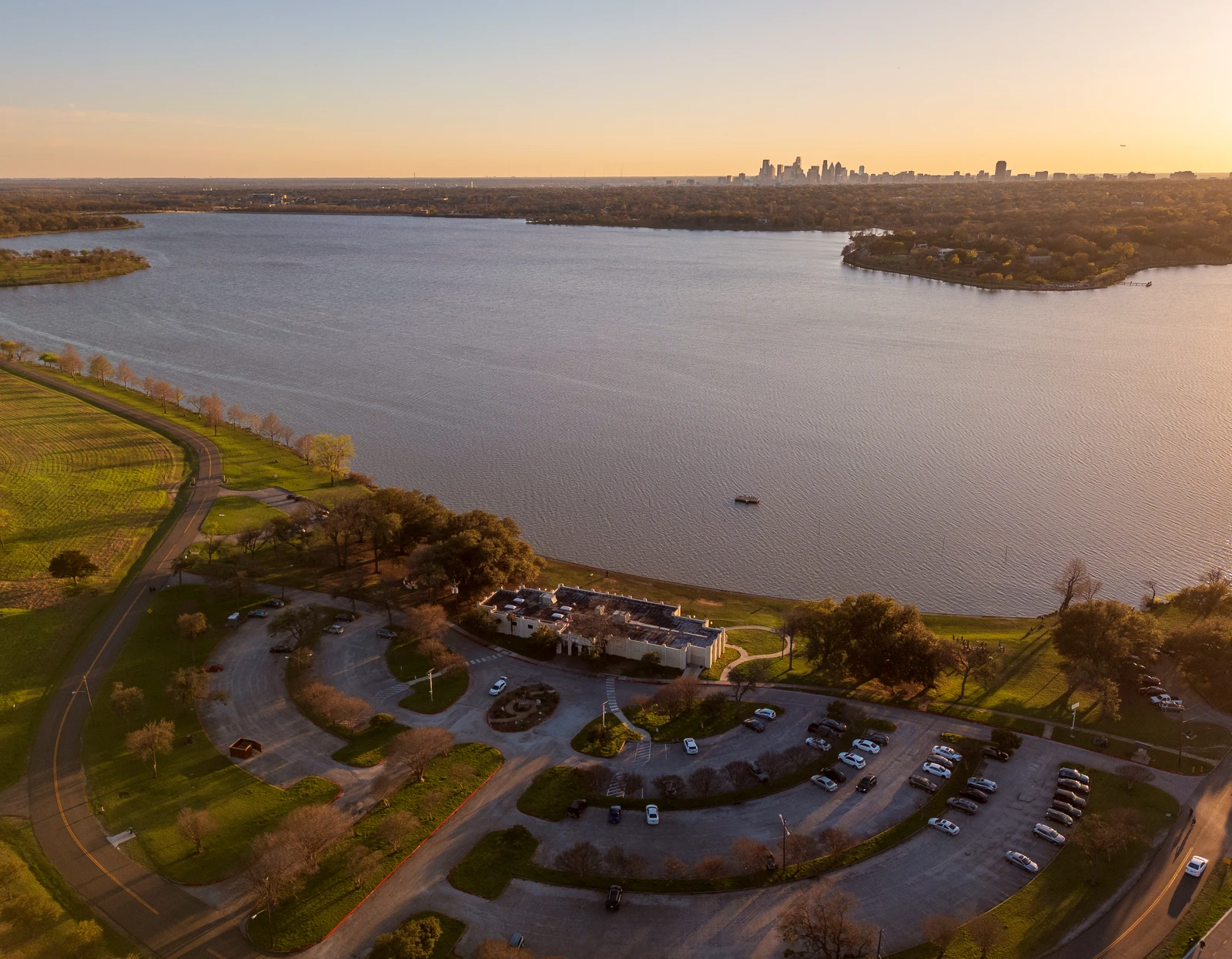
The Lady of White Rock Lake is Dallas’s oldest and most enduring ghost story – a vanishing hitchhiker tale that has circulated since at least the 1940s. The earliest published account appeared in the Texas Folklore Society’s 1943 collection Backwoods to Border, written by Anne Clark.
The story goes like this: a woman in a soaking wet white dress flags down a passing car near the lake at night. She asks for a ride home, gives an address in Oak Cliff. The driver agrees. When they arrive at the destination, the backseat is empty – nothing left but a wet spot on the upholstery.
The Friends of White Rock Lake acknowledge the legend on their website, though the lake’s unofficial historian Sally Rodriguez has noted she’s “found lots of stories, but no stories that match” a confirmed drowning victim. The tale is likely an urban legend variant that latched onto White Rock’s moody nighttime atmosphere – the lake was built as a reservoir in 1910 and converted to recreational use in the decades that followed.
Real or not, the Lady of the Lake is as Dallas as the Pegasus. And if you’re driving the east shore after midnight and someone waves you down, maybe keep going.
Practical note: White Rock Lake Park is open daily from 6 a.m. to 11 p.m. The 9.3-mile trail around the lake is popular with runners and cyclists by day. By night, it gets quiet fast. Free parking at multiple lots around the lake.
3. Sons of Hermann Hall – Deep Ellum
3414 Elm Street, Deep Ellum
Sons of Hermann Hall is Dallas’s oldest freestanding bar, built in 1910 to house the local chapter of a German fraternal organization founded in Texas in the 1890s. The building is on the National Register of Historic Places and is a Texas Historic Landmark. It is also, by most accounts, actively haunted.
The primary ghost is a woman who reportedly fell to her death on the grand staircase while attending a dance in the ballroom. When that happened and who she was are details that have blurred with time, but the activity attributed to her is specific: doors opening and closing on their own, objects moving or vanishing, and phantom footsteps on the stairs.
The building hosted film productions including Walker, Texas Ranger and the original RoboCop during the 1990s, which means the ghosts have screen credits – or at least were present for them.
NBC 5 investigated the ghost sightings and found the reports remarkably consistent across decades of staff and visitors.
Practical note: Sons of Hermann Hall operates as a live music venue and event space. Regular shows, dancing, and private events. The staircase is right there when you walk in. Address: 3414 Elm Street, Dallas, TX 75226.
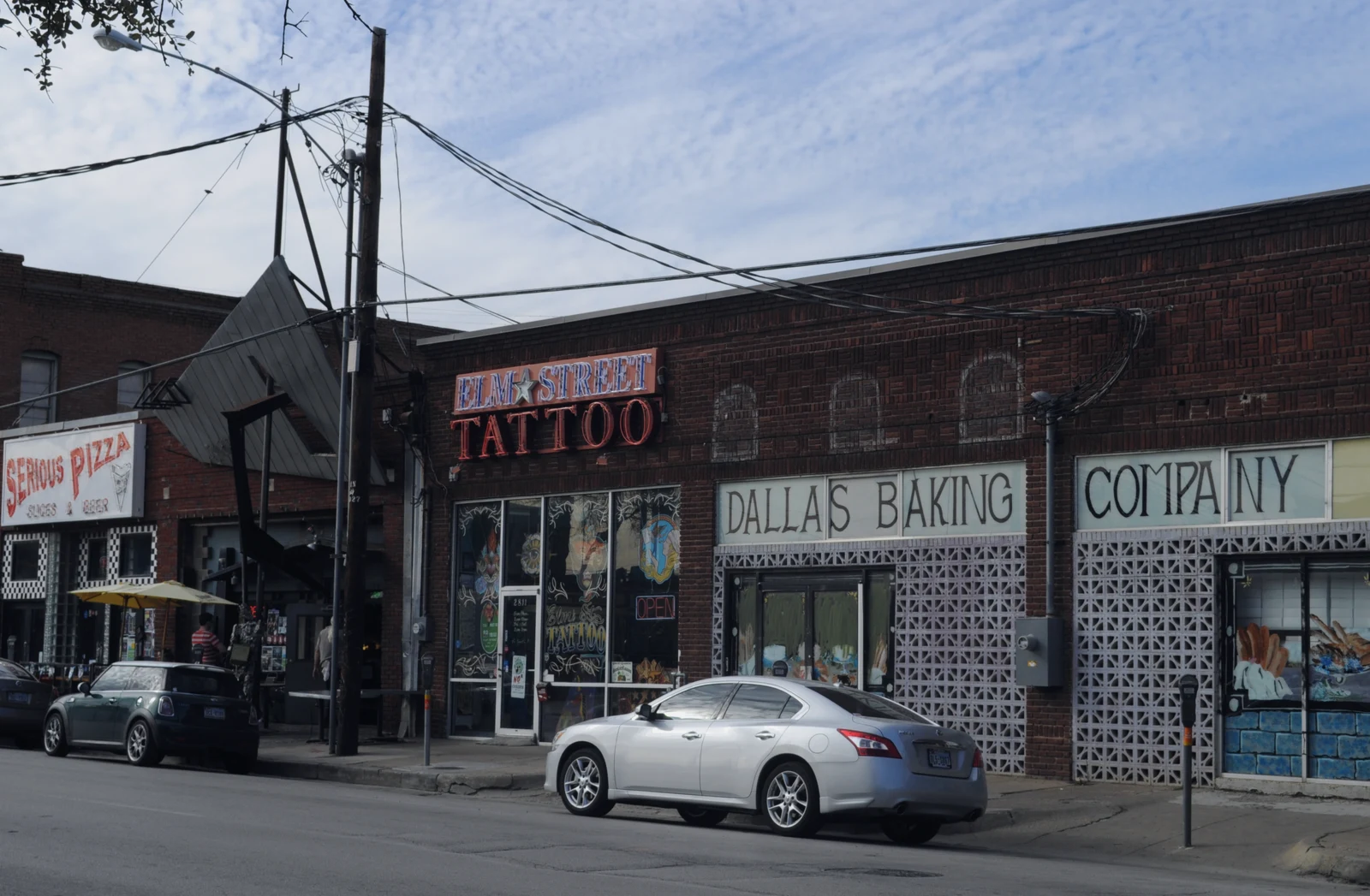
4. Snuffer’s Restaurant – Lower Greenville
3526 Greenville Avenue, Lower Greenville
Snuffer’s opened at 3526 Greenville Avenue in 1978, but the building’s history predates the cheddar fries. Before Snuffer’s, a bar called The Easy Parlor occupied the space, and during a going-away party in the biergarten, a fight broke out. A man was stabbed (or shot – the accounts disagree). He stumbled down the hallway and collapsed in the men’s restroom, his body blocking the door.
Since then, employees and customers have reported milky apparitions, glasses levitating off tables, lights flickering, cold spots, the sound of children laughing, and the distinct sensation of being tapped on the shoulder by nobody. The children’s laughter has its own explanation – some accounts claim the restaurant’s foundation sits over a former burial ground, though that’s one of those Dallas stories that’s hard to confirm and impossible to fully dismiss.
D Magazine collected firsthand accounts from Snuffer’s employees in 2016, and their stories are remarkably consistent: the lights swing in rhythm, something brushes against you, and you learn to just keep working.
Practical note: The original Greenville Avenue location is the haunted one. Snuffer’s has expanded to multiple locations, but the ghosts stayed put. Open daily for lunch and dinner. The cheddar fries are worth the trip regardless of your stance on the afterlife.
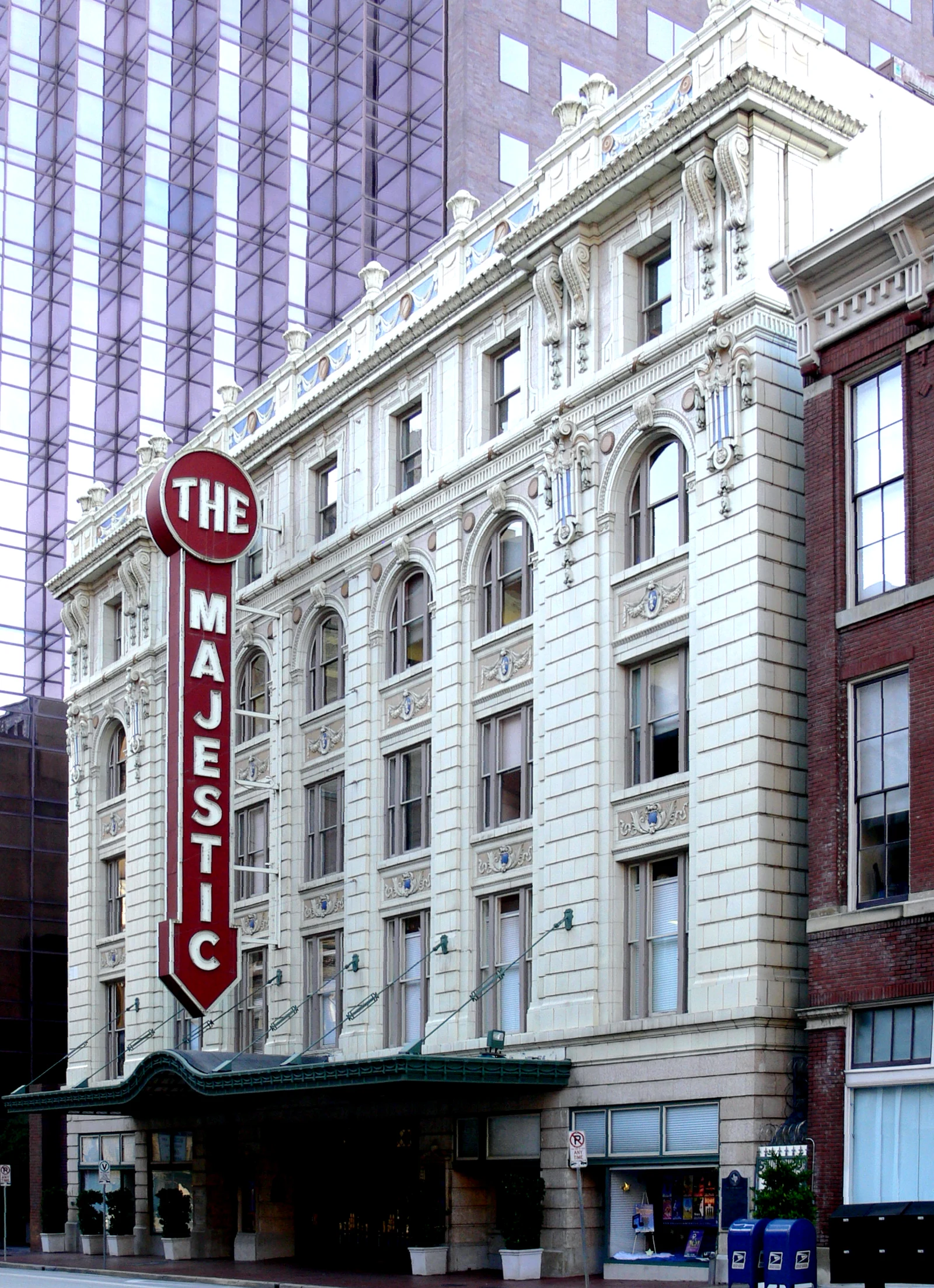
5. The Majestic Theatre – Downtown
1925 Elm Street, Downtown Dallas
The Majestic Theatre opened on April 21, 1921 – a Renaissance-style showpiece designed by atmospheric theater architect John Eberson for Karl Hoblitzelle’s Interstate Amusement Company. During its vaudeville heyday, Harry Houdini (who performed here in 1923), Bob Hope, and Mae West all graced the stage. Later, it pivoted to film premieres with stars like John Wayne and Jimmy Stewart walking through the lobby.
The ghost most commonly reported is a former stagehand whose footsteps echo through the theater’s lower levels. Unexplained breathing has been heard in empty corridors. Lights flicker without electrical explanation. There are also accounts of a young woman who died under unclear circumstances within the building – her presence is associated with the upper balconies and dressing rooms, though the historical record on this one is thin.
The Majestic is one of those buildings where the sheer age and density of human experience makes the paranormal reports feel almost inevitable. A century of performances, thousands of nights, millions of footsteps – and apparently, a few that never stopped.
Practical note: The Majestic Theatre is an active performance venue managed by Live Nation. Check their calendar for shows – it’s a gorgeous room to see live music or comedy regardless. 1925 Elm Street, Dallas, TX 75201.
6. The Stoneleigh Hotel – Uptown / Turtle Creek
2927 Maple Avenue, Uptown
Built in 1923, the Stoneleigh (now Le Meridien Dallas, The Stoneleigh) is on the National Register of Historic Places and carries one of Dallas’s most cinematic ghost stories.
Colonel Harry Stewart was a regular guest so devoted to the hotel that he purchased the property and converted the 11th floor into Dallas’s first penthouse suite. He also, according to persistent local accounts, had a mistress named Margaret who used the hotel’s Prohibition-era secret tunnels and concealed doorways to reach him discreetly. Both Colonel Stewart and Margaret died after falling – or being pushed – down 12 flights of stairs. The details around how two people fell down the same staircase are murky, which is exactly the kind of ambiguity ghosts thrive on.
Staff and guests have reported seeing a woman in a 1930s-era silk dress on the upper floors and in the penthouse. She flickers lights, shatters bar glasses when displeased, and sends the elevator on solo trips from floor to floor. One guest told CBS News that he slept with the lights on for two nights because “there was a man in my room wearing a black suit.” When staff showed him a vintage photograph of Colonel Stewart, the guest screamed in the lobby: “That’s him.”
The hotel celebrated its 100th anniversary in 2023 and leaned into the haunted reputation. Hard not to, at that point.
Practical note: Fully operational hotel. You can book a room and test the theory. The bar is open to non-guests. Rates generally start around $200 per night, though pricing varies by season and room type.
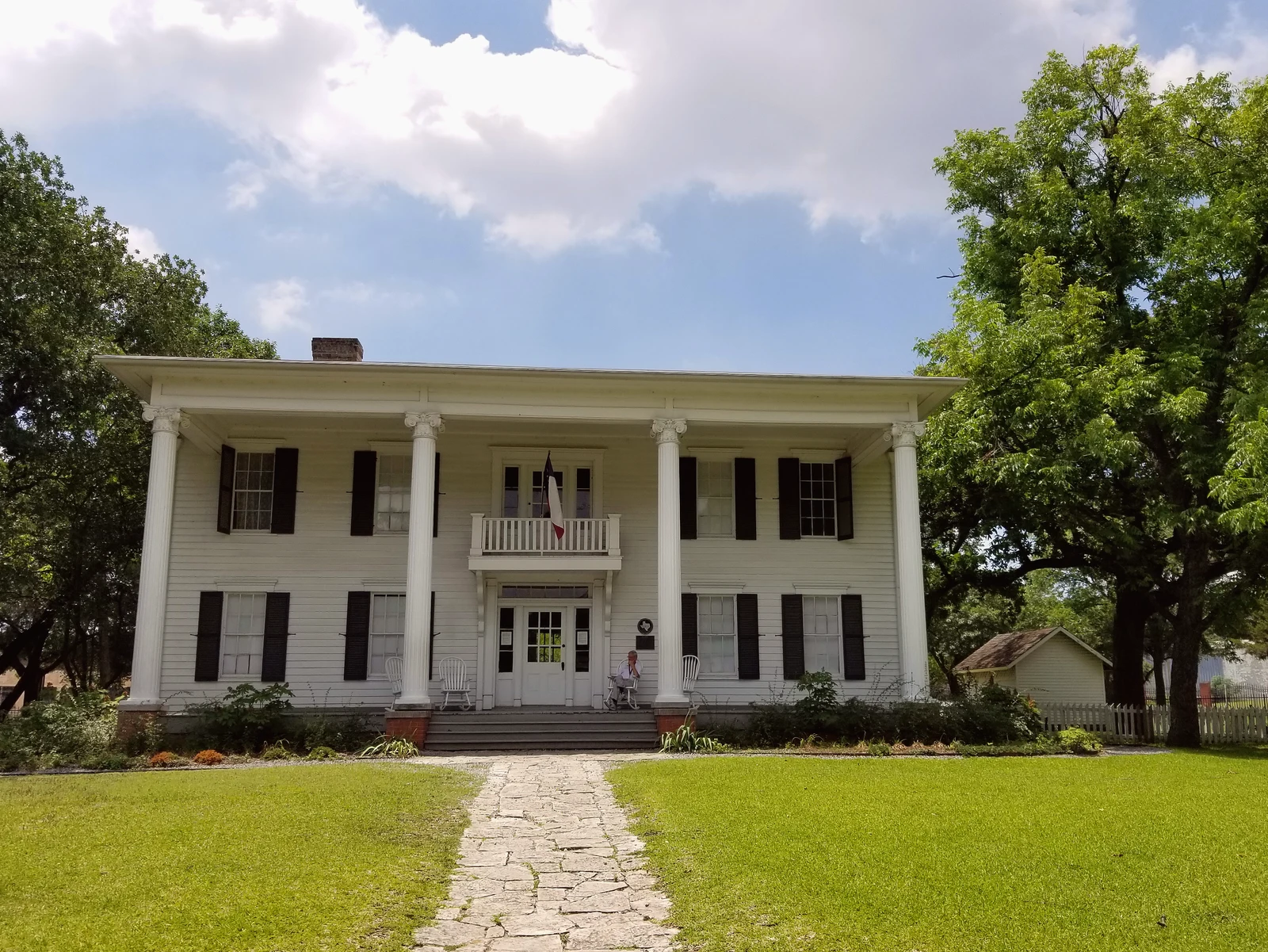
7. Millermore Mansion – The Cedars / Old City Park
Dallas Heritage Village, 1515 South Harwood Street
Millermore is the largest pre-Civil War house surviving in Dallas – a Greek Revival mansion originally built between 1855 and 1862 for the Miller family on their plantation south of the city. It was relocated to Dallas Heritage Village (formerly Old City Park) in the 1960s, and the ghosts apparently moved with the furniture.
The most commonly seen apparition is a woman in period clothing – possibly Minerva Miller or a former caretaker – spotted on the staircase or near the upstairs windows. The second-floor sickroom and nursery are where activity concentrates. Staff have documented sudden, dramatic temperature drops in the nursery. Several of the Miller children died young, and some believe their presence lingers in the home.
There’s something particularly unsettling about a building that was uprooted from its original location and reassembled somewhere else, yet the hauntings followed. Whatever’s attached to Millermore, it’s attached to the wood and plaster, not the land.
Practical note: Dallas Heritage Village is open to visitors. General admission is around $10 for adults. The mansion is part of a larger collection of preserved Victorian and pioneer structures. Check their website for hours and event programming – they occasionally do special tours around Halloween.
8. The Old Red Courthouse – Downtown / Dealey Plaza
100 South Houston Street, Downtown Dallas
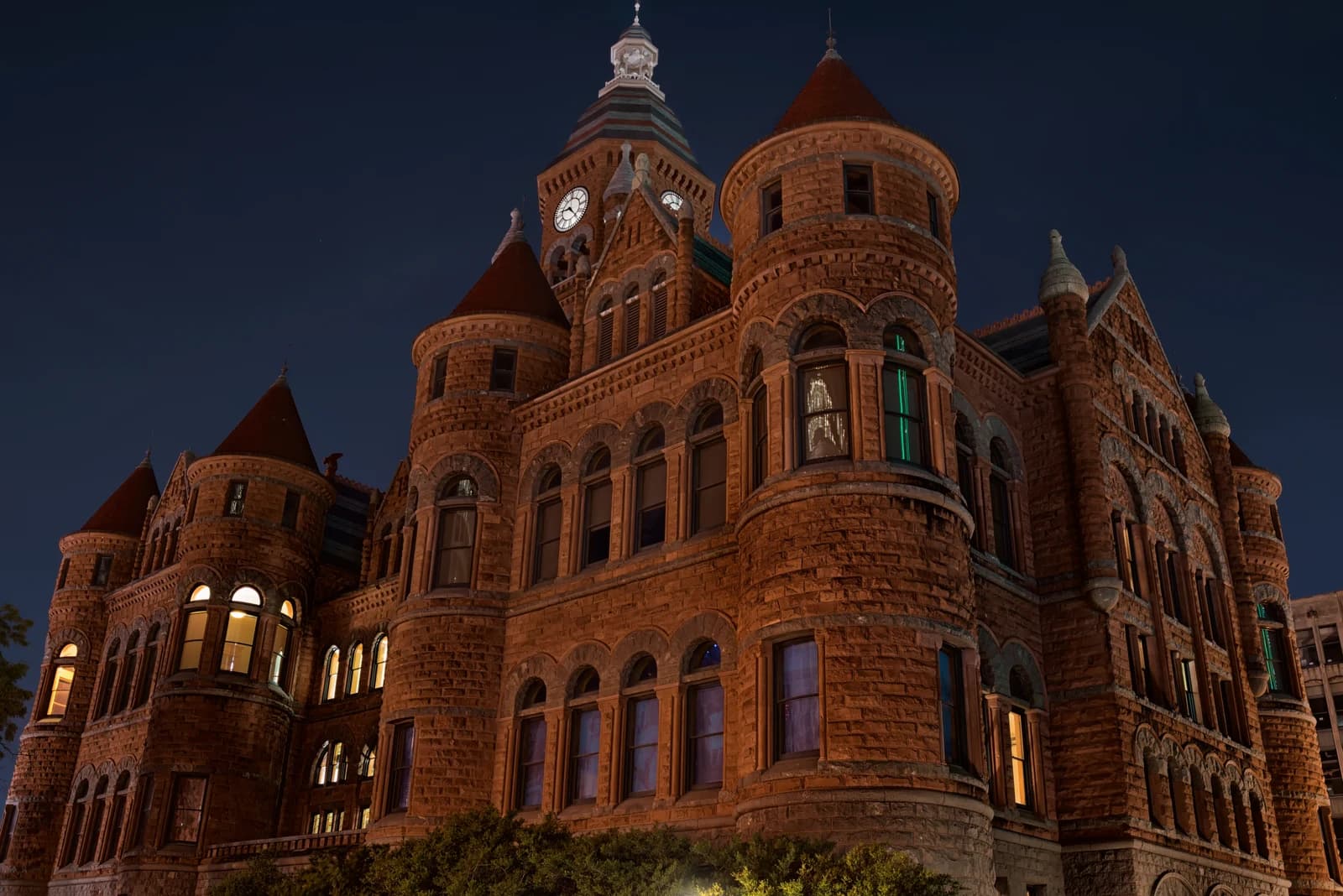
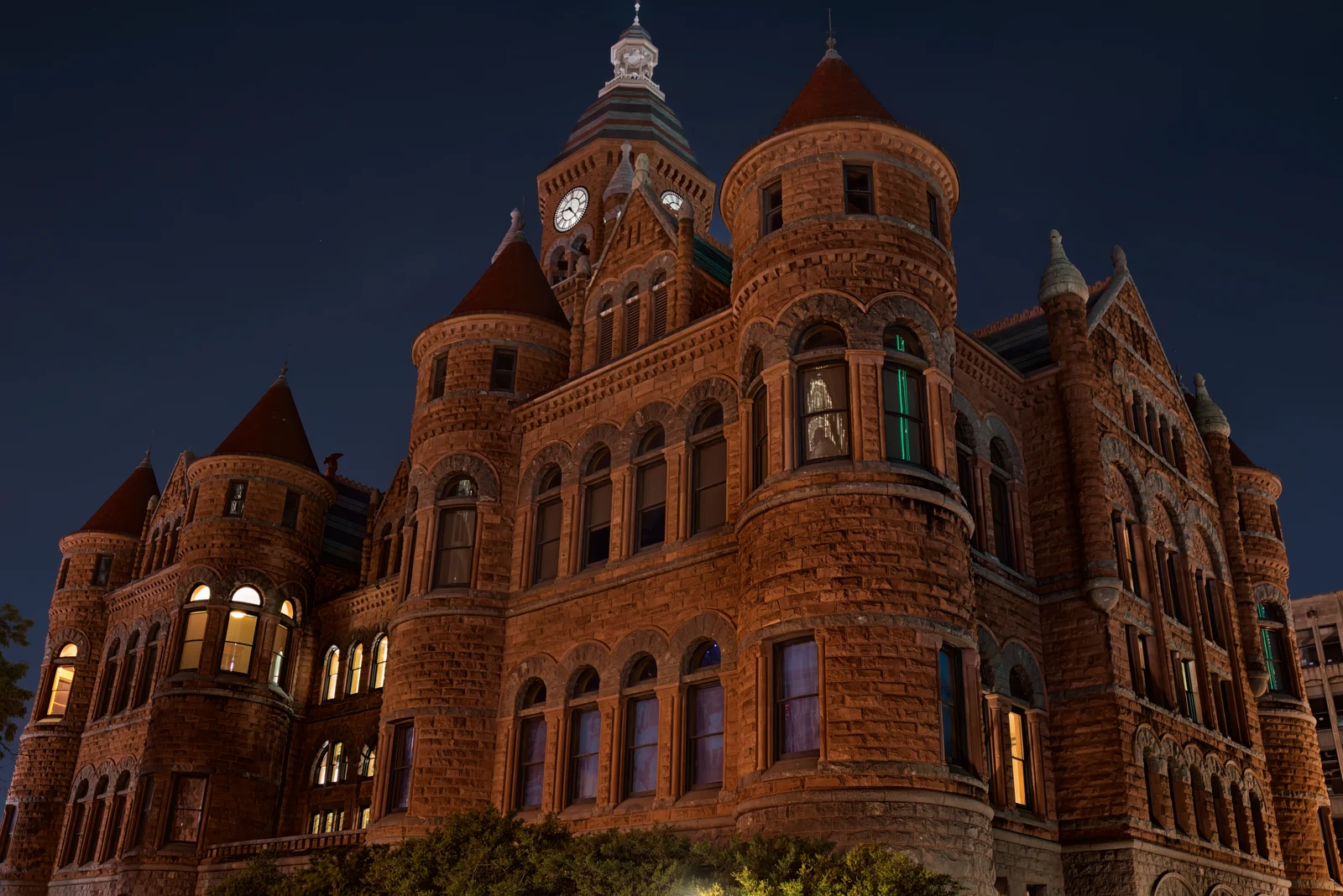
The Old Red Courthouse, built in 1892 from red sandstone and granite in Romanesque Revival style, sits at the edge of Dealey Plaza. It formerly housed the Old Red Museum of Dallas County History and Culture, though the museum has since relocated and the building returned to judicial use in 2024 for the Texas Fifth District Court of Appeals. For over a century it served as the county courthouse, which means it absorbed every murder trial, bitter divorce, land dispute, and sentencing hearing Dallas County produced for generations.
Ghost tour operators who run routes through downtown consistently flag this building as a paranormal hotspot. The reports are what you’d expect from a place that has processed that much human conflict: unexplained cold spots, the sound of footsteps in empty corridors, and the general feeling of being observed.
Practical note: The Old Red Courthouse is no longer a public museum – the building returned to judicial use in 2024. You can still admire the striking Romanesque Revival exterior from the street. It’s directly adjacent to the Sixth Floor Museum and Dealey Plaza, so you can combine a history visit with your ghost hunting.
9. The Sixth Floor Museum at Dealey Plaza – Downtown
411 Elm Street, Downtown Dallas
This one requires a different tone. The former Texas School Book Depository, where Lee Harvey Oswald fired the shots that killed President John F. Kennedy on November 22, 1963, is now a museum dedicated to the life, death, and legacy of JFK. It is treated with appropriate gravity by the institution that manages it and by the vast majority of visitors.
It is also, unavoidably, a place where people report feeling something. Whether that’s the weight of history or something else depends on your framework. Visitors have described cold spots near the sixth-floor window, an oppressive heaviness in the stairwell, and an unshakable sense of presence. Some paranormal investigators claim the building’s ghosts predate the assassination entirely – the structure was built in 1901 and served various commercial purposes before it became the most infamous building in Dallas.
Out of respect for the history: treat this site seriously. It’s not a haunted house attraction. It’s a place where something real and terrible happened, and whatever you feel there – grief, unease, something else – deserves quiet reflection, not theatrics.
Practical note: The Sixth Floor Museum is open daily from 10 a.m. to 5 p.m. (last entry at 4:15 p.m.). Adult admission is $27, with discounts for seniors and youth. Children under 6 are free. Advance tickets recommended. Audio tour included with admission.
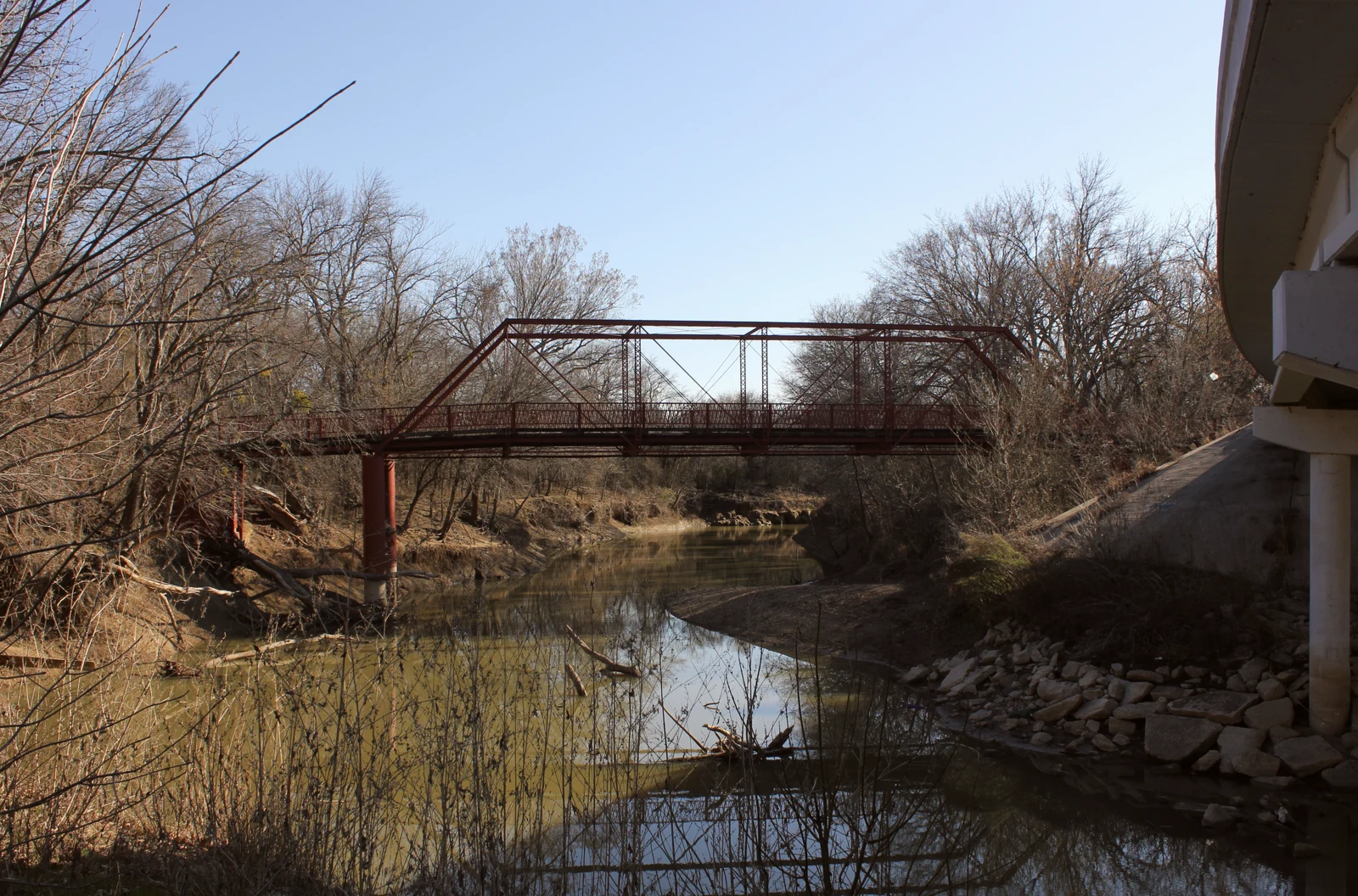
10. Goatman’s Bridge (Old Alton Bridge) – Denton
Old Alton Road, south of Denton
Technically outside Dallas proper, but close enough to DFW that it belongs on this list – and it’s arguably the most famous “haunted” site in the region. The Old Alton Bridge is an 1884 iron truss bridge spanning Hickory Creek, south of Denton. It was decommissioned for vehicle traffic and is now a pedestrian bridge within a nature preserve.
The legend: in the 1930s, a successful Black goat farmer reportedly hung a sign on the bridge advertising his business. Local Klansmen, enraged by his success, allegedly lynched him on the bridge. When they looked over the railing, the body was gone – no rope, no trace. The “Goatman” has reportedly haunted the bridge since, appearing to those who knock three times on the bridge’s surface after dark. Historians have found little evidence to verify the farmer’s existence or the specific incident, but the story reflects the well-documented reality of racial violence in early 20th-century Texas – researchers have counted over 700 lynchings in the state between 1882 and 1942.
The bridge draws ghost hunters, paranormal investigators, and curious visitors regularly. Denton County has had to manage the site’s popularity – it’s a real place with real foot traffic, especially in October.
Practical note: The bridge is accessible via trails in the Old Alton nature area. Open 24 hours, free to visit. Bring a flashlight if you’re going after dark, and be aware that the trails are unlit. There is no formal parking lot – park along the trailhead area off Old Alton Road. About 40 minutes north of Dallas.
11. Catfish Plantation – Waxahachie
814 Water Street, Waxahachie
About 30 miles south of Dallas, the Catfish Plantation built an entire brand around being haunted, and to their credit, the reports were extensive enough that the Travel Channel featured the restaurant on multiple paranormal programs. The restaurant permanently closed in 2022, and the historic building was later damaged in a fire in January 2026 while operating as a different business.
The building dates to the late 1800s, and the reported ghosts included a bride who appeared standing at the front window, an older woman associated with the smell of fresh-brewed coffee (employees had arrived to find the coffee already made, with no one else in the building), and a farmer. Levitating objects, blue glowing lights, and plates sliding off tables were all documented by staff over the years.
Waxahachie itself is worth the drive for the Victorian architecture downtown, so you can make a day of it – history and a walk through one of Texas’s most photogenic town squares.
Practical note: The Catfish Plantation restaurant is permanently closed. The building at 814 Water Street sustained fire damage in early 2026. You can still visit the exterior and walk the surrounding Waxahachie historic district. Waxahachie is about a 35-minute drive south of Dallas via I-35E.
How to Actually Tour Haunted Dallas
If reading about these places isn’t enough and you want to walk through them after dark with someone who knows the stories, Dallas has several ghost tour operators worth your time:
- Dallas Terrors runs nightly walking tours at 7 PM and 8 PM, rain or shine, departing from Ferris Plaza (400 S Houston Street). Educational and well-researched. Tickets run $20 – $30.
- Nightly Spirits offers all-ages walking tours ($25 per person) and private group bookings (starting at $300 for up to 10 people). Costumed guides, 1.5-hour routes through downtown.
- US Ghost Adventures operates haunted history walking tours covering Dealey Plaza, Deep Ellum, and downtown.
Check our events calendar for seasonal ghost tours, Halloween events, and paranormal-themed programming throughout DFW. October gets booked fast.
A Note on Believing
Dallas is a city that runs on pragmatism – real estate deals, quarterly earnings, Cowboys draft picks, whether the Tollway is backed up past Spring Valley. Ghosts don’t fit neatly into that identity. But spend enough time in a 1912 hotel elevator or a Deep Ellum dance hall built before your grandparents were born, and the pragmatism starts to wobble a little. These buildings have absorbed over a century of living. Maybe some of that sticks.
You don’t have to believe in ghosts to appreciate the history behind every name on this list. The Adolphus is still one of the finest hotels in Texas. Snuffer’s still makes the best cheddar fries on Greenville Avenue. Sons of Hermann Hall is still the best place to catch live music in a room with actual soul.
The dead, if they’re really there, have good taste.
Looking for more things to do around Dallas? Browse local events happening this week or explore Dallas businesses and venues in our directory.